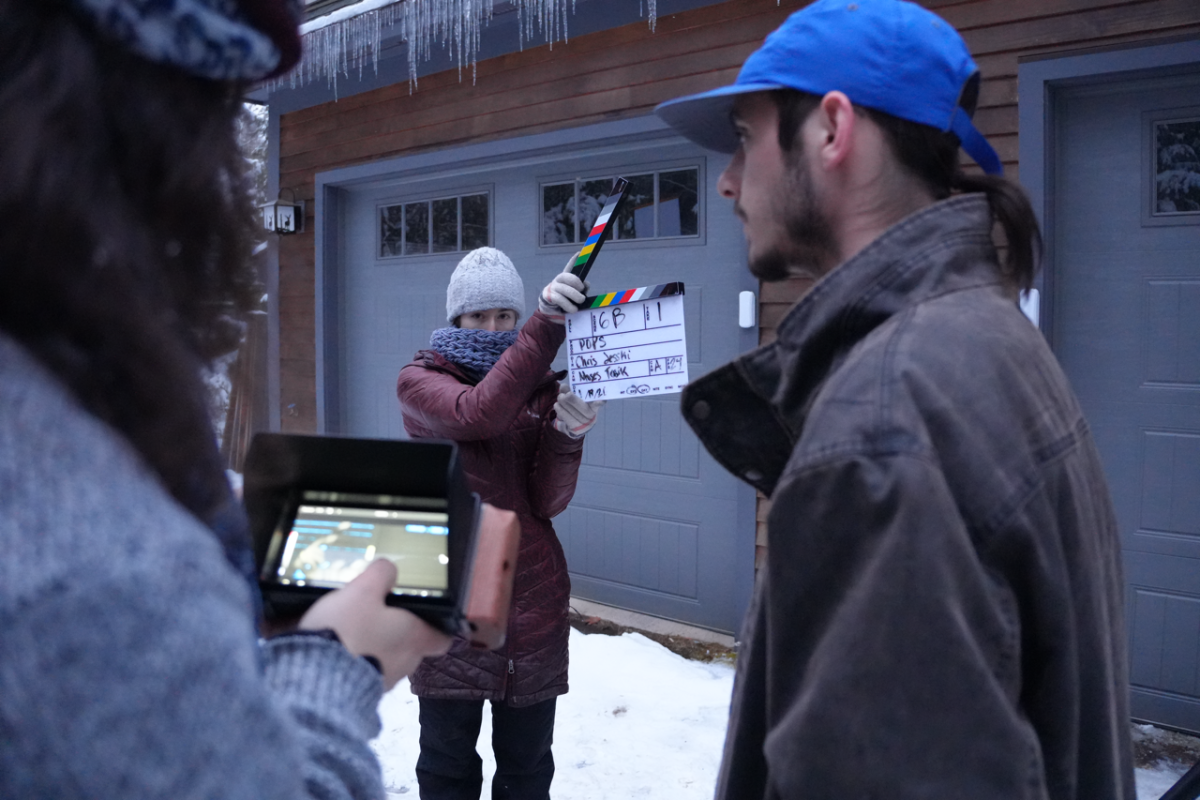
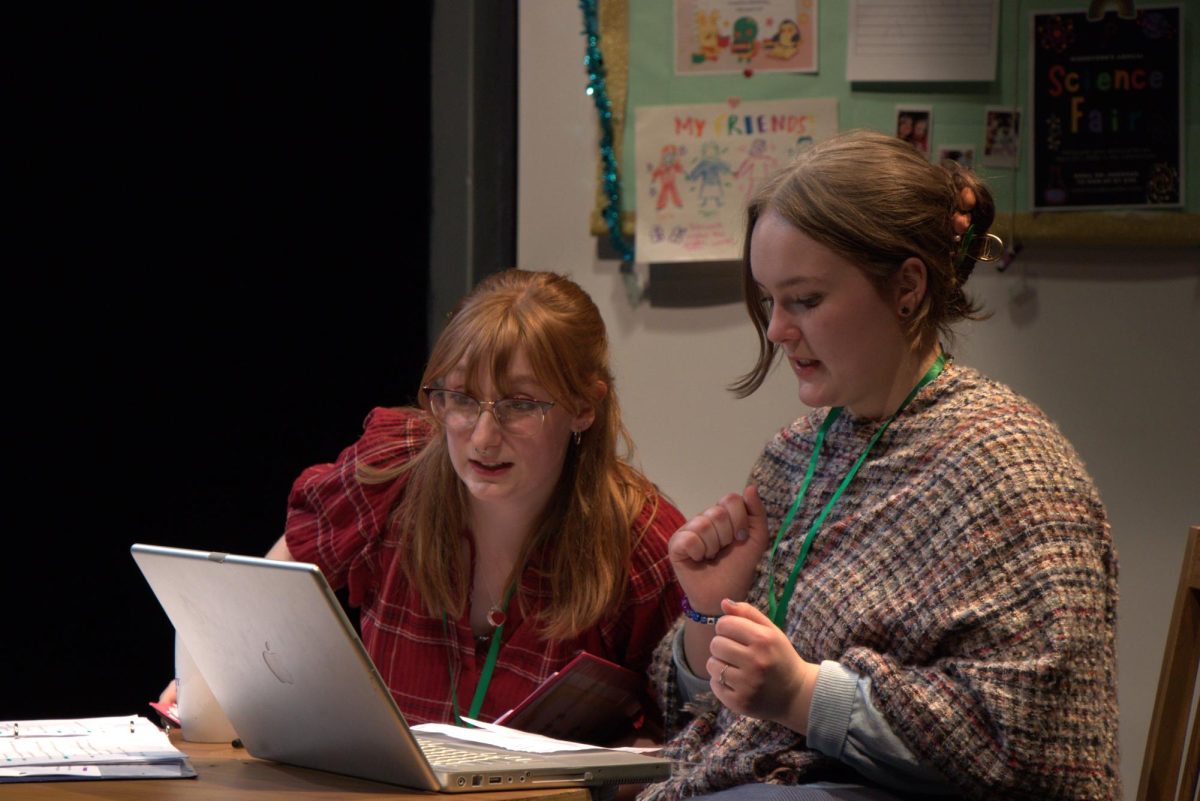
A team of student filmmakers from Suffolk University traveled up to Maine Jan. 14 to film the short film “POPS,” a story about grief and love.
Written and directed by senior film production student Christopher Jesski, the film centers on Will, a young man who returns to his late grandfather’s woodshop months after his sudden death. Instead of closure, he is met with his dead grandfather somehow back. What follows is an emotional confrontation between memory and reality, guilt and forgiveness.
Jesski said the story grew out of his own experience losing his grandfather two years ago. The last messages he received were voicemails asking him to call back, calls he didn’t get the chance to return.
“I was a college sophomore, caught up in everything,” said Jesski. “The last voicemail he left was the day before he passed. That leaves you with a lot of guilt.”
Rather than focusing on loss alone, Jesski said “POPS” is about looking at relationships beyond their final moments.
“This is a chance to look at what they gave you,” said Jesski. “To accept not only that they’re not here anymore, but to accept yourself and live for yourself instead of holding onto guilt.”
Though Jesski studies at Suffolk, the film was done independently from the university, making it his largest project outside the classroom. The screenplay went through nearly 10 drafts over four months before its 7-day shoot.
Once in Maine, the crew faced obstacles immediately. On the first night of production, they discovered the lenses they had ordered did not fit their camera, forcing them to temporarily shoot on different cameras while rushing an emergency lens order.
In another moment that became part of set lore, 2025 Suffolk graduate and Assistant Director Olivia Messer’s car slid into a ditch, which paused production as crew members worked to free it.
Despite the setbacks, Jesski said the week became one of the most meaningful experiences of his life.
“I’ve worked on bigger sets. I’ve worked on smaller sets,” said Jesski. “I’ve never felt that much warmth.”
For the final scene, Jesski added real items from his grandfather’s life, including mementos like his grandfather’s watch. He then asked each crew member to add their own personal items representing someone they had lost. Those mementos were placed around the woodshop set, surrounding the actors during filming.
“Everybody had something,” said Jesski. “We had everyone’s love and everyone’s loss in that frame.”
For Jesski, “POPS” allowed him to not only understand his own story but also understand the stories of everyone he worked with.
“Work is love made visible,” he said. “That’s what this set was. It was collective healing.”
Staff photographer for The Suffok Journal and junior film and media student Nicholas Peace, a member of the crew, said he was struck by the motions Jesski brought to the project. Peace served as an assistant director and handled audio duties, handling multiple roles at once.
“My role was mainly making sure production ran smoothly, keeping call times and schedules on track, while also running audio,” said Peace. “There’s always something that goes wrong on a student film, so adapting and overcoming challenges is part of the job.”
He added that Jesski’s approach to adding in crew members’ personal experiences into the film made the emotional impact of the story they were telling even stronger.
“Chris encouraged everyone to bring a piece of their own story,” said Peace. “Seeing our mementos in the final shots made me realize how connected we all were. It was healing for everyone on set.”
Messer said much of her work began long before the filming started.
“In pre-production, I was mainly responsible for creating the shooting schedule,” said Messer. “Taking the shot list Chris and Moses made and figuring out which scenes we were filming on which days, accounting for weather, daylight and actor availability. You’re basically building the blueprint of how the week is going to run.”
Once production began, that blueprint quickly had to become more flexible.
“Every day the schedule would just be in the trash,” she said. “It was a lot of adapting and timekeeping. Making sure that, no matter what changed, we still had the pieces we needed to tell the story.”
Moses Tasik, a senior film and media production major who served as director of photography, worked closely with Jesski for months, creating the film’s visuals.
“My job in pre-production was creating the overall look and feel,” said Tasik. “We had a lot of late nights building the shot list, figuring out lenses, cameras, all the small technical decisions that make a film what it is.”
For both Messer and Tasik, “POPS” marked a change from the documentary-heavy coursework common in their program to a narrative-driven film.
“With documentary, you know where you’re going, but you’re filming what happens,” said Messer. “With narrative, you have to get specific scenes or you don’t have a story. That was new for me.”
The team also raised roughly $10,000 through a GoFundMe campaign and word of mouth, which was surprising to Tasik.
“Fundraising was huge,” Tasik said. “That’s not something we’d really done before.”
Despite all of the hurdles, Messer described the weeklong shoot as one of the most emotional and important projects they’ve ever done.
“There was a moment in the cemetery where we were just hitting every shot in one or two takes,” said Messer. “It was freezing, but it was beautiful. We were in our groove. That’s when it felt like, ‘This is why we love filmmaking.’”
The emotional peak came on wrap night. After the final scene, Jesski gathered the team for a roundtable reflection.
“He gave a really emotional speech,” Tasik said. “Then everyone shared their experience. It was very emotional, in the best way.”
Peace emphasized how Jesski was a collaborative and empathetic director.
“He pushed actors in a way I’d never seen before,” said Peace. “He really opened up and allowed everyone’s personal stories to breathe in the production.”
Peace added that the final days of shooting were emotional for many, as crew members saw their own mementos become part of the story.
“As a student, seeing how we could all contribute to something so personal was incredible,” said Peace. “This film isn’t just Chris’s, it’s all of ours.”
Tasik shared this sentiment and is hoping that audiences can pull those same emotions the crew felt, making this story real.
“We really hope people resonate with it as much as we did,” said Tasik.
The connection between all crew members was shared and felt by everyone, many describing it like a family.
“I’ll spend my career trying to replicate what we built there,” Jesski said. “It was the best experience of my life.”
Support “POPS” and stay updated on its progress through the film’s site.