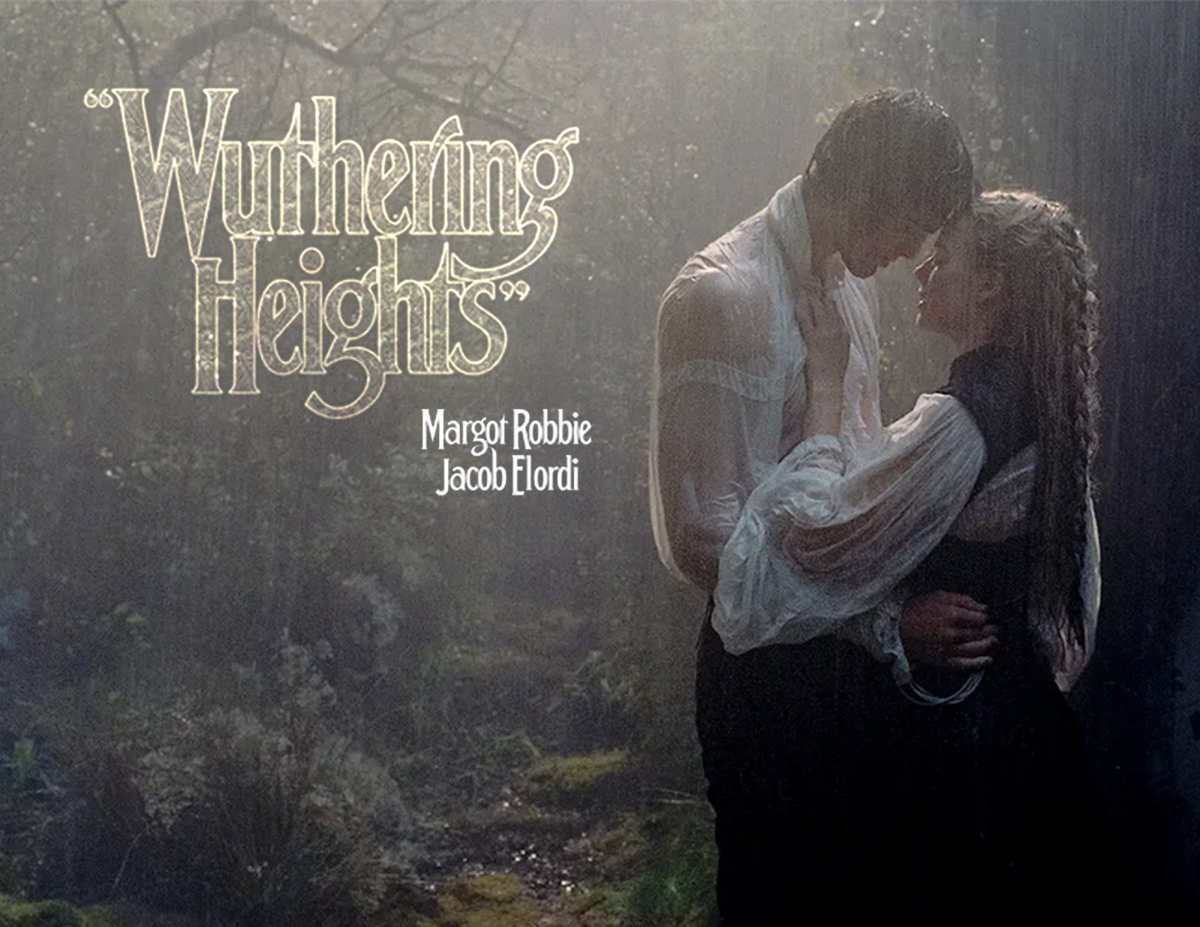
The new adaptation of “Wuthering Heights” from Director Emerald Fennell was never going to be neutral territory. From the moment the trailer dropped, audiences could tell this wouldn’t be a reverent, page-by-page recreation of “Wuthering Heights.” And that’s exactly why reactions to the film are so polarized.
The discourse surrounding the movie ultimately comes down to a single question: Are adaptations allowed to be loose interpretations, or is deviating from the source material inherently disrespectful?
There’s a tendency in literary adaptations to treat the original text as sacred — something to be translated, not transformed. That approach risks flattening what makes art compelling in the first place. Stories endure because they can be reinterpreted. They survive because they change shape depending on who tells them and when.
With so many existing screen versions of “Wuthering Heights,” another faithful retelling might have felt redundant. Fennell’s interpretation instead opts for something far more divisive; a film that feels almost separate from the novel altogether, it is almost its own story. That gamble is exactly what gives the movie its energy and appeal.
Watching it in theaters, one thing became immediately clear — this film leans heavily into shock value. Whether that was Fennell’s intention or simply the result of bold storytelling choices, the effect is undeniable. The original novel isn’t dull by any stretch, but this adaptation amplifies its emotional volatility to an almost surreal level. The result is a film that may frustrate a more “pure-minded” audience, but succeeds as a standalone work.
One of the most debated aspects of the film has been its costuming, particularly the blatant period discrepancies and lack of historical accuracy. But many think that rather than undermining the story, the wardrobe choices actually reinforce the film’s thematic core.
Fennell’s approach to Cathy’s (Margot Robbie) costumes feels deliberate rather than careless. By rejecting strict historical accuracy, the film signals early on that it’s prioritizing symbolism over realism. The lines aren’t blurred when it comes to accuracy; every choice feels deliberate.
Color becomes the most striking visual language here. Red dominates this film’s color palette — in Cathy’s clothing, in high-tension scenes, even in the Linton house’s interiors. The choice is hardly subtle, but it doesn’t need to be. Red represents passion, obsession, danger and emotional excess — all of which define this version of the story.
Because the relationships and narrative are reimagined, the stylized costuming actually feels cohesive. If the plot is allowed to be heightened and interpretive, it makes sense that the visuals follow suit. Instead of feeling like a historical drama or authentic period piece, the movie operates more like a visual metaphor.
However, the film goes wrong in its portrayal of Heathcliff’s (Jacob Elordi) relationship with Isabella (Allison Oliver). The dynamic is deeply uncomfortable to watch, and not in a way that meaningfully develops either character or pushes the story forward.
The scenes between the two feel more shocking than purposeful — included for intensity rather than narrative necessity. In a film already full of emotional extremes, this subplot ends up feeling less like a character exploration and more like a distraction, and not one that invokes any sort of positive emotion in a viewer. It’s one of the few moments where the movie’s commitment to provocation actively works against it.
Ultimately, this “Wuthering Heights” adaptation succeeds most when it’s viewed not as a translation of the novel but as a reimagined, loose version of it.
It’s understandable why some viewers feel protective of the original source material. But treating adaptations as creative conversations rather than sacred reproductions opens the door for something more interesting — and sometimes more memorable.
Fennell’s version may not replace the classic in anyone’s mind. But it does prove that even a story told countless times can still feel new when someone is willing to take risks with it.