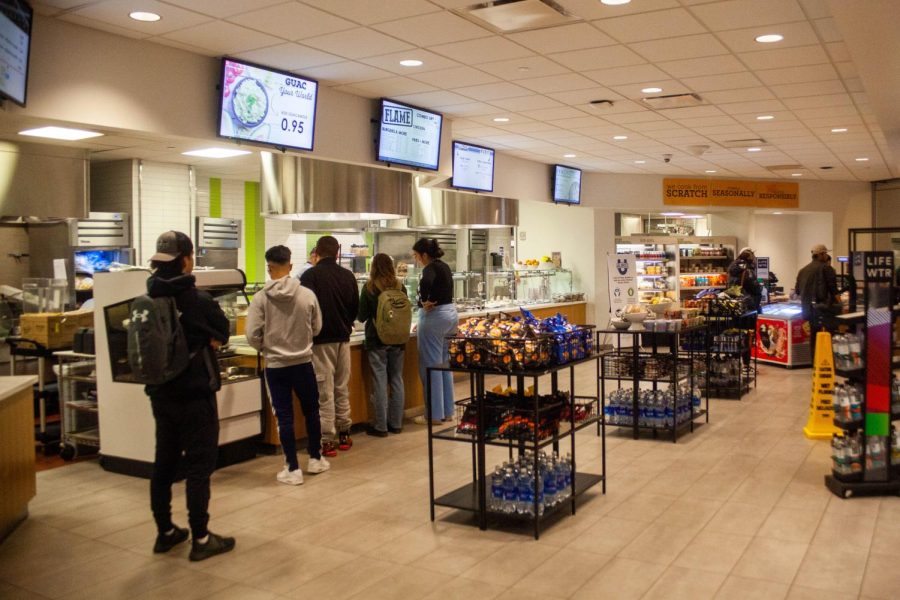
The restaurant industry is not for the weak or faint of heart. It is fast paced, lacks stability in pay, offers ungodly hours and exposes you to every archetype of human you could possibly encounter. And that is exactly why everyone should have to endure it.
The eight hours you spend behind a bar, a counter or in front of a table of ten will teach you communication skills, the importance of a strong work ethic and the power of empathy and kindness.
Since I was fifteen, I have been a barista, a waitress and a bartender. I have woken up at four in the morning as a sixteen-year-old to serve coffee and bagels, and I have stayed up until four in the morning cleaning the bar after a nine-hour bartending shift.
I have always been an extroverted person. I can hold a conversation, be attentive and have basic manners. You would be absolutely shocked at the amount of people I have served who genuinely don’t possess basic manners or empathy. People are shy, I totally understand. But I have worked with so many shy people who have broken their shell by serving and communicating with new customers and faces all day, every day.
By meeting dozens of new people every shift, you are learning how to deal with all different personality types. Your ability to read a room, social cues and emotions becomes intensely heightened. You can tell who is having a tough day, who is celebrating, who wants to be left alone and who is in need of a person to bounce conversation off of. We’re all looking for connection in some capacity, and as a service industry worker, you are the butt of the connection.
Your ability to communicate effectively directly affects your tips, your ability to garner regular customers and the quality of your shift. It becomes a direct reflection of the saying, “life is what you make of it.” You are pushed to be a good, if not great, communicator. If you wish to pursue a career in real estate, business, sales, management, journalism, politics or literally any job other than computer science, you need to communicate with other people. I hate to break that to you. It’s just the cold, hard truth. So, why not practice while you sling a couple of drinks and get to know some people?
Communication is not the only benefit of service industry experience, though. To many people’s surprise, you are not born with a work ethic. You can’t just never work a stressful day in your life, and then expect to be an effective member of a company with no experience under pressure. Work ethic is something that needs to be ingrained, tended to and pushed to its limits. Had my parents not forced me to figure out my own spending money in high school, I would not have half of the grit that I have now.
When you tend to your work ethic — by picking up extra shifts, working a double, having to deal with staining your clothes with food and drinks, being forced to run around for hours on end or being yelled at by a grown man because you forgot the ranch for his fries — you strengthen it.
The service industry can be quite literally unfathomable. You might have twelve tables at the same time. One might have every allergy you could possibly conjure up, while the other has four screaming toddlers running around the restaurant. One might have just spilled their drink and the glass shattered across the table, another just ate over half of their food and now wants it compensated from the bill because they “didn’t like it.”
This experience, though it may feel like God is punishing you, is strengthening your patience, your emotional regulation skills, your ability to communicate clearly and effectively what you need from the kitchen or coworkers and your ability to multitask and work under pressure. When you get put on a stressful deadline or have to present at a big meeting in your future career, you will thank those screaming children and hangry customers for preparing your nervous system to regulate.
Above all else, I truly believe that some of the most empathetic, kind people I know have worked in the restaurant industry. You are seeing different emotions all day, every day. You can tell when people are upset or happy. Being around humans every day tunes you into others, for better or for worse.
Every time I go out to eat, I tip well, help stack empty plates and cups and wipe up any crumbs or cup rings. But it’s not just in restaurants. It’s when I’m shopping for clothes, and I decide I don’t want the shirt I picked up. Instead of throwing it on any rack, I’ll put it back where I found it. It’s when I see a UPS worker carrying a large amount of boxes and I offer up my help. It’s when I make sure I know my coffee order when I get to the register, so I don’t hold up the stressed barista’s line. When you spend your days in hospitality, catering to other people and making sure they feel welcomed and happy, those values don’t leave you. They trickle into your everyday life. Friendships, family, even short interactions with strangers. Empathy becomes second nature.
Working in a restaurant might be stressful at times, but it is also a beautiful mosaic of people coming to a third space to relax, connect and enjoy their free time. Your coworkers become like a little family. You grow relationships with regular patrons, where a lot of opportunities and networking can naturally occur. You meet the most interesting people, whether it be Whiskey Myers, an MLB umpire, the man who builds Stevie Nicks’ stages, Wallows — the list goes on and on.
So if you’re graduating from college, in college or are looking for a little extra connection and communication skills, I strongly implore you to apply for a restaurant job. Feel the adrenaline of a busy shift, the pressure, the rollercoaster of emotions. You might even get some free fries from the kitchen while you’re at it.
Jeff Bezos worked at McDonald’s. Barack Obama worked at Baskin-Robbins. Tyler, The Creator, worked at Starbucks. Madonna worked at Dunks. Go sling drinks, flip some burgers and get yelled at for not having Dr. Pepper. It’ll build character, I promise.