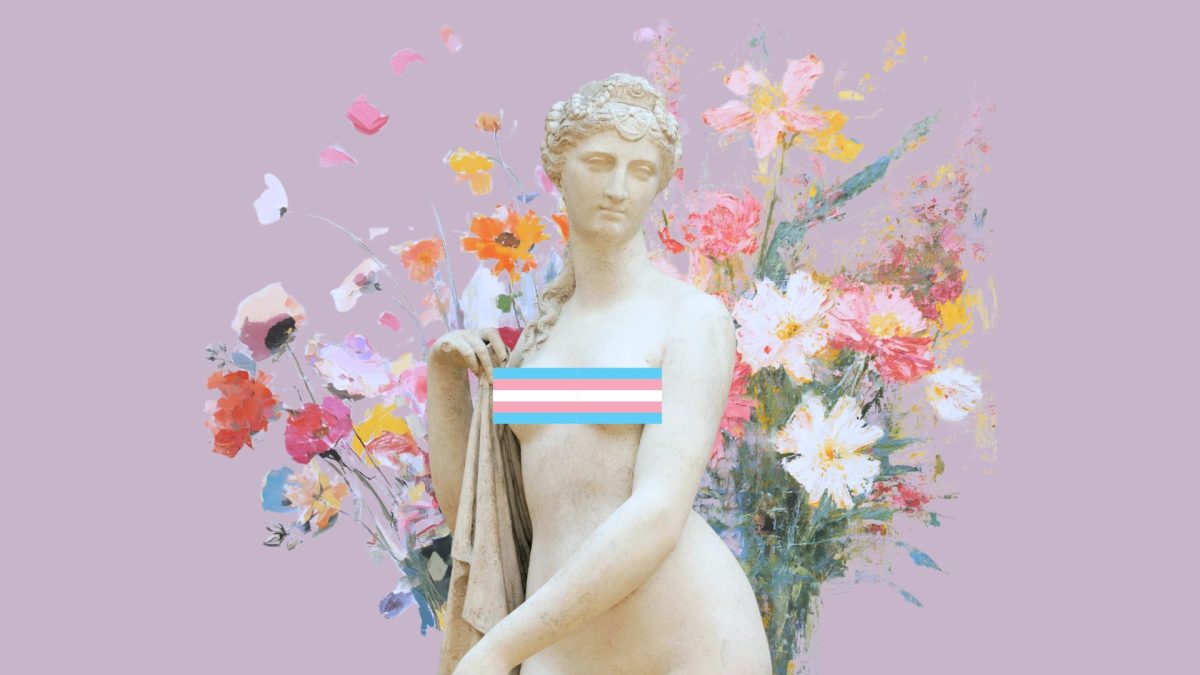
A post to singer Ethel Cain’s Instagram account April 1 has stirred up mixed reactions among fans and non-fans due to depictions of nudity. Though sexual depictions of nudity should not have a place on such public facing and accessible social media platforms such as Instagram, this instance is not one of them. It is an artistic statement that should be celebrated instead of condemned.
Cain, whose real name is Hayden Anhedönia, is a 28-year-old American singer-songwriter originally from Tallahassee, Florida. She released her first EP “Carpet Bed” in 2019 and her debut album “Preacher’s Daughter” in 2022. Anhedönia’s music is primarily indie rock and contemporary folk with heavy influences from her Southern Baptist upbringing. The alias Ethel Cain is the name of a character played by Anhedönia throughout her work.
The Instagram post features photos depicting Anhedönia sitting on a bed with her genitals exposed. A point of contention is the fact that Anhedönia is a transgender woman who has a penis. With limited and inaccurate images of transgender people in the mainstream media, especially when it comes to bodies that don’t conform to gender stereotypes, it is unsurprising that this depiction would cause a stir.
Criticism over the photos pertains mostly to the compliance of these photos with Instagram’s community guidelines. Currently, photographs of uncensored genitalia, regardless of the context, are prohibited under the Meta community guidelines. However, this section of the guidelines has been criticized for its vagueness and inconsistent enforcement. The photos remain available at time of writing and Anhedönia’s account is restricted, so users under 18 cannot view it. The post in question has a warning of “sensitive content” that must be acknowledged before it can be viewed.
The photos in no way portray Anhedönia’s nudity in a sexual or crude way. They are meant as an artistic expression of the artist’s identity. For a platform that has a documented problem with disturbing and explicit content, it is laughable that unsexualized nudity on an already restricted account is brought to the forefront of concern for some. While it is true that the post will become viewable to some minors due to the bypassing of age restrictions, the potential harm done does not nearly size up to actual pornographic material available on the platform.
Meta has a history of policing transgender bodies on their platform. Discourse over what body parts on which types of people are allowed has plagued its moderation efforts for some time, and it affects real transgender individuals who intend to use the platform just like everybody else. Between this and the public expressions of discontent, it’s clear that the concern is not over nudity but who gets to display nudity.
The censorship and stigmatization of transgender bodies not only further marginalizes transgender individuals, but negatively impacts cisgender individuals as well. Transphobia is a tool that regulates the gender expression of all people by narrowly defining what gender is supposed to look like for certain people.
Although many cisgender people may not picture a woman as having a penis, restricting this as unfeminine works to narrowly define what a woman is supposed to look like. The idea that a woman can look like infinitely different things must include transgender women if it is to be unoppressive.
The sexualization of these images by audiences reflects the hypersexualization of queer and transgender individuals in the media. Though not unrelated, conflating queerness with sex and framing queer bodies as inherently sexual is problematic for a number of reasons. It strips queer people of their identities and encourages heterosexism and strict gender roles. The immediate assumption that Anhedönia’s post was of sexual nature is dehumanizing, waters transgender women down to their anatomy and disallows their gender from being a passive aspect of their identities. This is another reason why it being available for the public to view is important; having nonsexual depictions of transgender bodies to point towards as opposed to solely pornographic ones normalizes their existence.
As the post was made the day after Transgender Day of Visibility, a day dedicated to raising awareness about the discrimination faced by transgender people around the world, its remaining available marks a win for transgender visibility on social media.
Dollie Kyarn, the photographer who took the photos, made a statement pertaining to the backlash on their own Instagram account.
“Every day that passes, trans people in this country lose more and more rights. This is a statement on trans rights. This is a statement on women’s rights. This is a statement on censorship.” said Kyarn. “But, simply, this is an intimate photograph of a friend I love so deeply and who inspires me every day.”
Kyarn’s commentary signifies how the backlash entirely overlooks the fact that this is an artistic work, instead focusing on miscategorizing nudity as taboo when that was not the intention. The dreamy quality of the photos and vulnerability shared by Anhedönia further highlight the idea that transgender bodies are beautiful, too. A look at Kyarn’s previous work supports this — their photographic style focuses on portraying the lives and identities of queer people in rural America, a setting and subject that often conflict with one another.
The images most certainly have a deeper purpose beyond a first glance, but the misinterpretation of that surface-level meaning as sexual is more ideologically loaded than it lets on.