Season four of “Bridgerton” delivers a refreshing and visually stunning romance reminiscent of the fairytale magic found in “Cinderella.” Netflix’s hit historical romance series returned to screens Jan. 29 with the final four episodes set to release Feb. 26.
This season follows Benedict Bridgerton (Luke Thompson), the second-eldest Bridgerton brother. Convinced his older brother carries the brunt of his family’s reputation, Benedict remains steadfast in his refusal to marry. His mother, Violet Bridgerton (Ruth Gemmell), is desperate for him to abandon his rakish tendencies and finally take a wife.
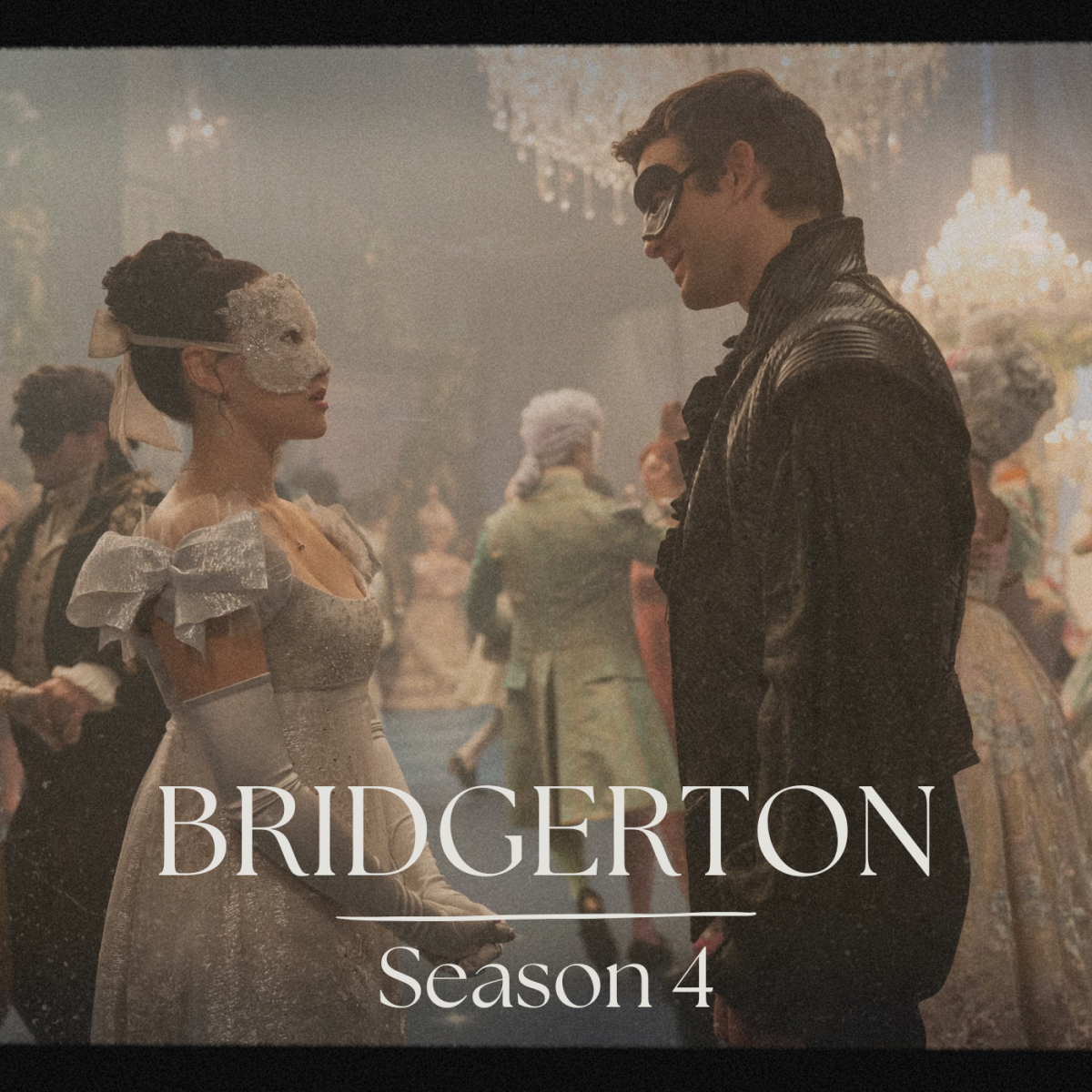
Despite his disdain for high society and debutante events, Benedict agrees to attend the masquerade ball held at Bridgerton house for his mother’s sake. He arrives late, in typical fashion, but immediately becomes enamored with a masked, young woman dressed in silver. They share a romantic moment together before she flees at midnight, leaving Benedict with no indication of her identity except for a single satin glove.
Benedict spends the next three episodes searching for the mystery woman that stole his heart, even enlisting in Lady Whistedown’s help. Just when he thinks he is close to finding her, his efforts prove fruitless. Then, while on escape to the countryside, he meets an intriguing servant named Sophie Baek (Yerin Ha). He promises to help her find work in the city after she abruptly loses her job at the house she was employed at.
As the two spend more time together, Benedict becomes conflicted between finding the mystery woman from the ball and his growing love for Sophie. He knows society would frown upon a marriage with a servant and that he would be better off continuing his search for the masked woman. What he doesn’t know, however, is that Sophie is the masked lady in silver he has been so desperate to find.
Something “Bridgerton” has consistently done well for four consecutive seasons is the unique costumes. Designers artfully combine period-accurate silhouettes with colors and patterns uncharacteristic of the time period. Each high-society family even possesses their own color palette. Season four maintains this production magic, adding a colorful romanticization of the 1800s. Some may be distracted by the costumes from the masquerade ball, such as Eloise Bridgerton’s (Claudia Jessie) Jane of Arc outfit. However, the perceived tackiness of the other characters’ costumes draws viewers to the timeless elegance of Sophie’s disguise. It makes her stand out against the crowd, proving how easily she caught Benedict’s eye from across the room.
The set design for this season successfully compliments the story as well. The dimly lit ball, adorned with florals and laced with signs of a rich lifestyle, perfectly represents the mysteriously romantic tone of a masquerade and the overwhelming awe Sophie experiences as a fish out of water. While Benedict and Sophie get to know each other, the warmth, seclusion and child-like fun of the countryside paints a clear picture of their growing love.
One of the most vital parts of any on-screen romance is the chemistry between the two leading actors. The effortless portrayal of desire and longing between Benedict and Sophie establishes the chemistry between actors Thompson and Ha. Their romance, though sometimes frustrating due to Benedict’s clumsy understanding of love, feels real. This holds true in every scene, whether it features pining glances or playful fun. The two can’t seem to stay away from each other, regardless of the societal repercussions that would come with their love. Thompson and Ha communicate this desperation very well. So far, the interaction between the two leading characters and the actors’ performances are setting this season up for a romance more satisfactory than Penelope Bridgerton and Colin Bridgerton’s from season three.
The series is also known for its reimagining of pop songs as classical pieces. Just the first four episodes contain a number of these recognizable renditions including “Life in Technicolor” by Coldplay, “DJ Got Us Fallin’ in Love” by Usher, “Never Let You Go” by Third Eye Blind, “Enchanted” by Taylor Swift, “All I Wanted” by Paramore and “bad idea right?” by Olivia Rodrigo. The use of these songs is an interesting way to communicate the emotions of each scene in a way modern audiences would understand. It also makes the season more engaging, encouraging viewers to find the Easter eggs from the 21st century. The final song of the first four episodes, “bad idea right?,” is particularly fitting for the scene it accompanies, setting the tone and tension for the second half of the season.
This season has reinforced the show’s ability to romanticize the ordinary: a glance across a crowded room, a short dance, the brush of a hand, quick glances. Audiences will certainly be holding their breath in anticipation for Feb. 26 because season four’s passionate love confession has yet to be seen. If the final episodes can out-do the romance felt in the very beginning of the season, viewers are sure to stick around to watch the remaining Bridgerton siblings find their own loves.