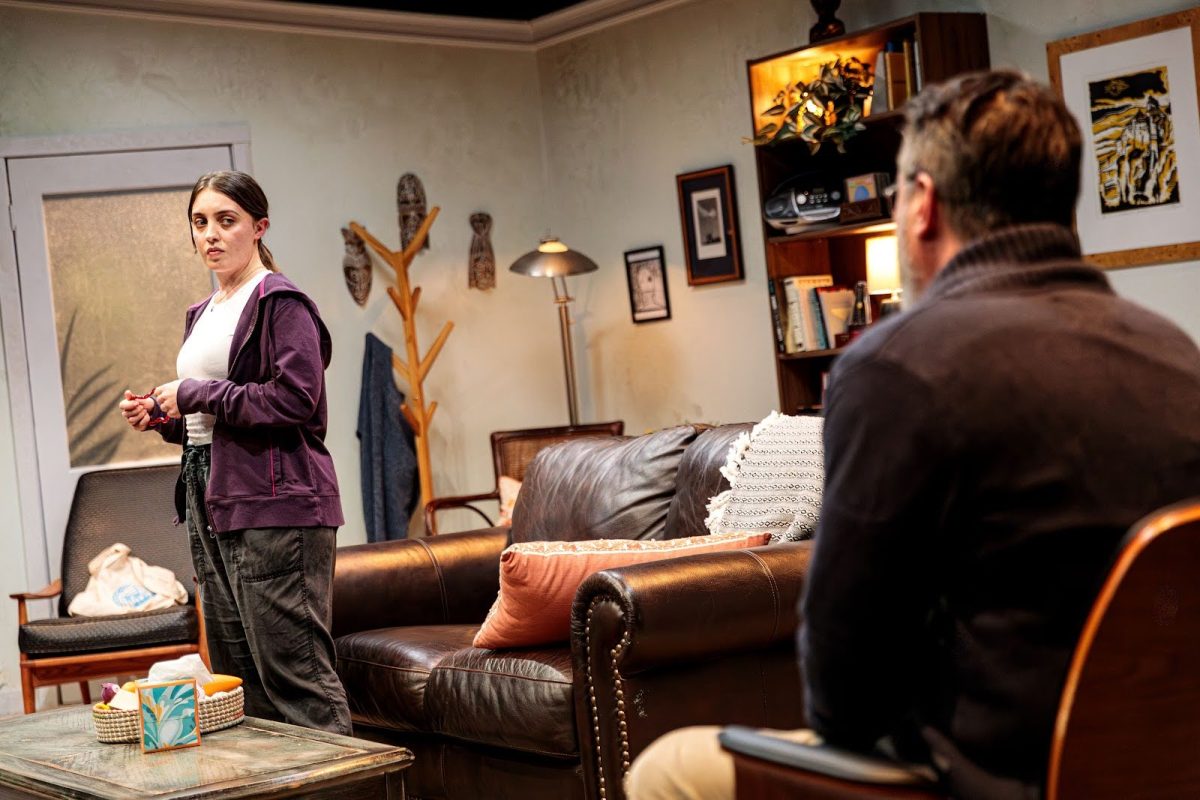
I can confidently classify Nia Akilah Robinson as a worthy playwright after seeing Company One Theater’s production of “The Great Privation (how to flip ten cents into a dollar).” This genre-mixing drama premiered at Suffolk’s Modern Theater Jan. 9. The play follows a mother and her teenage daughter across two time periods — high-stakes 1830s Philadelphia and the present day — as they fight to protect their legacy as a black family in a society constantly trying to exploit them.
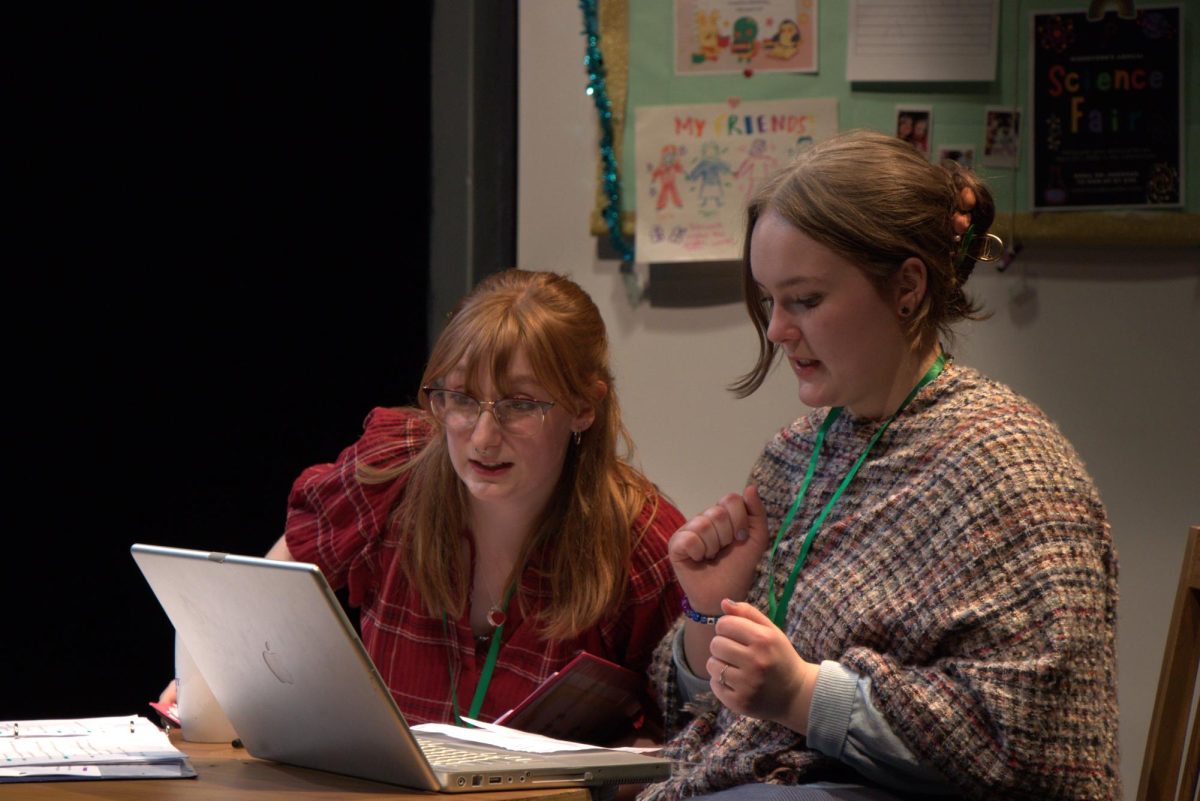
Yetunde Felix-Ukwu and Victoria Omoregie portray a comfortingly realistic and convincing chemistry as Minnie and Charity, a close-knit mother-daughter duo we first see in a dimly lit graveyard late. They have just buried Moses — Minnie’s husband and Charity’s father — during a cholera outbreak. The banter between the two characters feels very modern: Charity fantasizes about marrying a caterer “so I don’t have to set foot in the kitchen,” while Minnie scoffs at the idea of remarrying, remarking that at 34 years old she “should’ve died already.” This exchange, along with several others throughout the play, stood out to me as examples of the quintessential mother-daughter dynamic, which Felix-Ukwu and Omoregie illustrate flawlessly. Sitting in the audience, I felt myself missing my own mother more than once.
Now back to the graveyard: the two are not only there to grieve. They are also guarding Moses’ body from grave robbers sent by a medical research college — a historically accurate practice in which Black corpses were exhumed, usually without consent, for research. When the grave robbers arrive, played by Marc Pierre and Zack Powell, they justify their actions by claiming future generations will benefit, promising a world without cholera or tuberculosis “because of what we’re doing now.”
Rather than linger on the vast and extensive medical specificities or ethics of this dark chapter in United States history, the play focuses on the generational trauma that stems from centuries of violence against Black people. In the modern-day storyline, Minnie and Charity work as counselors at a summer camp built on the same Pennsylvania graveyard where their ancestor was buried. The proximity to their family’s history leaves them with an inescapable sense of unease, loss and curiosity. Charity shows this curiosity perfectly through the eyes of a stubborn 16-year-old girl with an intense passion for life.
This play also brought in multiple contrasting genres, weaving together drama and comedy along with some ghost-story-like elements. A large, ominous digital clock counts down throughout the first half of the show, while a fourth-wall-breaking sequence jolts the audience into the hyper-present reality of the modern era. Director Mina Morita largely succeeded in navigating the tricky transitions between grounded, realistic scenes and moments of a more supernatural nature, maintaining the play’s balance and tone throughout.
“The Great Privation” was an insightful and immersive experience that I would recommend to anyone who enjoys plays or history (or neither). The characters are incredibly compelling — richly drawn by the writer, emotionally grounded and brought vividly to life by the cast. The combination of raw, painful historical accuracy and supernatural, science-fiction-esque themes blends surprisingly well together. This play leaves a strong impression — it has strong weight and intensity, while also feeling incredibly playful, which in and of itself, is a pretty spectacular theatrical feat.