While living in a country that seems to be inching towards a full-thrown dictatorship, being immersed in a fictional tyrannical society that oppresses women in the name of God might not seem like a thrilling escape; however, it continues to enthrall.
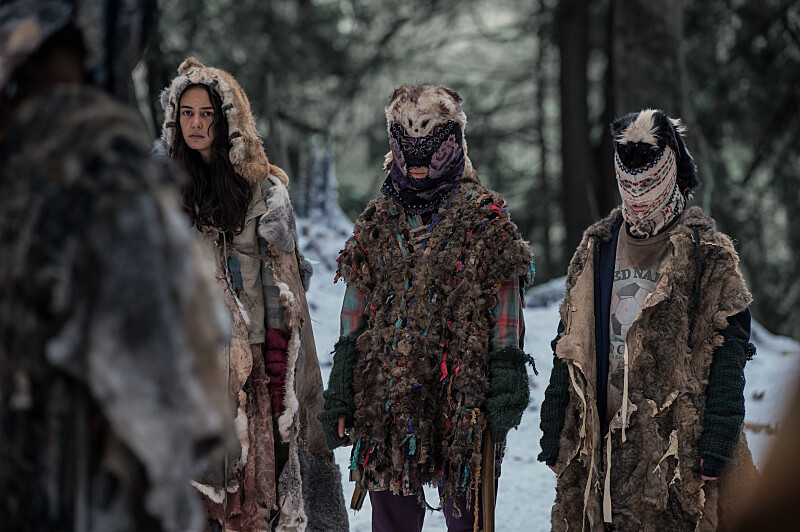
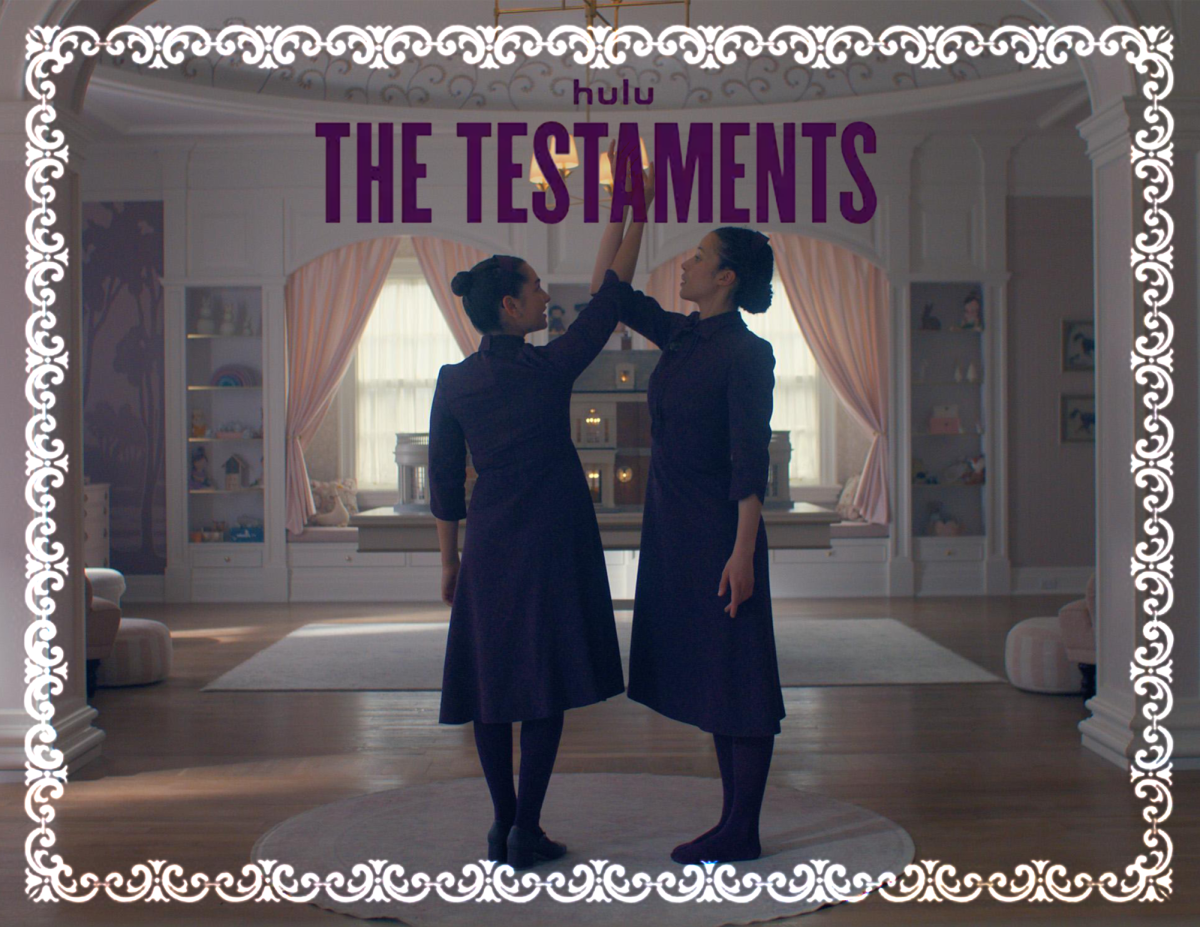
Hulu has officially re-opened the dystopian world of Gilead in its new series “The Testaments,” this time highlighting the experiences of kids and teenagers living in the theocratic society.
Much like the predecessor, “The Handmaid’s Tale,” “The Testaments” is based on a Margaret Atwood novel. Atwood’s sequel novel was released in 2019, 34 years after she introduced the world to a twisted reality that stripped women of their autonomy, their choice, their freedoms.
Less than a year after Hulu’s series finale of the six-season-long show, “The Handmaid’s Tale,” viewers are faced with a new perspective and account of womanhood in the fictional, yet hauntingly thematic, society of Gilead.
In this new account, the lives of the girls who have grown up only knowing life in Gilead are on full display. The now teenagers who have been told since birth that they are nothing but means of creating babies, are now “eligible” for marriage and they will inevitably question everything they have been told about their worth and the very values they were raised to believe.
As an adaptation, it must be stated that this new show follows a different story than the original novel; this becomes clear through the first three episodes that were released April 8. And really, how could it not? In Atwood’s novel “The Handmaid’s Tale,” the story ends with an unknown fate for the character Offred, or June, as she is later identified in the show. However, the television series stretches long after the events of the book. The show creates a different ending for June — one where she eventually escapes to Canada and is reunited with her daughter that she had as a handmaid in Gilead, whom June smuggled out of the country at the end of season two.
As nuanced and controversial as the ending of “The Handmaid’s Tale” series was, this article is not meant to rehash that series and what should and should not have occurred. To get back to “The Testaments” adaptation, there is one very obvious and important difference that must be addressed between the novel and the new series.
In the book, there are three narrators: Agnes, Daisy and Aunt Lydia. Each narration is framed as a testament that the characters give about how they became involved in the fall of Gilead.
Agnes is recognized as June’s daughter from “the old world,” or the time before Gilead. It is assumed that Agnes, or Hannah as she was named by June, was about 6 to 8 years old when she was taken from June at the beginning of the story. “The Testaments” begins when she becomes “eligible for marriage,” which is assumed to be when she is between 13 and 16 years old. It then follows her decision to become an aunt, her process to gain the status of an official aunt and her eventual role in ending Gilead’s rule.
Daisy grows up thinking she is an average teenager living in Canada, where she learns of the horrors happening in the country just south of her in school. Her part of the narration takes place when she is 16 years old and her parents die suddenly in an explosion. It is then that Daisy learns what her fate truly is: She was born in Gilead, she was baby Nichole — the symbol for all that was trying to be taken from Gilead, she was June’s baby that she had as a handmaid. This plays an essential role in how she is able to navigate within Gilead and, ultimately, aid in its downfall.
Aunt Lydia is one of the founding aunts of Gilead and has been noted in both the books and the previous television series to be an essential figure in the development of the country’s way of life. Through her narration, we see her hidden messages of how she has been collecting evidence against the country she so publicly influenced; all of the things that would one day burn Gilead down. Aunt Lydia plays a key role in both the rise and fall of this dystopian world. Her story highlights the central themes and messages of the story that Atwood creates in her work.
Here is where the pivotal difference lies: Daisy and Agnes appear to be the same age in the show. This means that Daisy cannot be baby Nichole. She cannot be June’s daughter, or Agnes’ sister.
So then, who is she in the show? Three episodes in, we remain in suspense.
What we know in the show is that this character of Daisy was born in Gilead, she was smuggled out as a baby and raised as a “normal” girl in Canada. We know that her adopted parents died in a mysterious explosion and that this event triggered her discovery that she didn’t know her true identity. All of this unfolded very similarly to the events of the novel.
With this key difference, the show begins to feel like less of an adaptation of Atwood’s novel and more of a new story unfolding in the fictional world of Gilead.
Looking beyond these inconsistencies, the new series starts off strong with a new point of view of what girlhood and womanhood mean in a theocracy that tells women they are good only for existing in the background, if they must even exist at all.
The series is set up to look critically at how growing up in a world that conditions young girls to be complicit trains them to care solely about birthing healthy children, find and treat their husbands with respect and violently shames and punishes any voice, action, person or feeling that thinks outside of the word of God, or more importantly, the word of the Gilead commanders.
One can only wonder: How do the children who know only this version of reality feel? What do they experience? Can they imagine any other fate? Do they know what having a choice even is? Will they ever experience love? This new series searches for such answers.
In Atwood’s novel, it is the oppressed who are able to take down the very system created to silence them. It is the women who come together to document, live, endure and, eventually, destroy the very regime that was created to silence and kill them. Thus far, the series is set up to achieve something similar, by telling the stories of those who were born with no choice but to comply.
As I watch this series in today’s world, I cannot watch as if it were a mysterious idea that could never possibly be a reality. I watch it as a warning. As a reality that was not formed overnight, but over weeks, months and years of slowly taking away rights. Of small rebellions that were seen as extremist ideology, as crazy. Until the day it wasn’t. Until the day it became reality. Until the day when you had to choose between compliance and death.
Throughout history, people have looked to the next generation to fix injustices, to fight for a better world. But what happens when the next generation grows up not knowing what better could be? Can they still fix it?
“The Testaments” may soon answer these questions. But to do so, we must endure the often graphic depiction of the abusive system they face every day. It then becomes our job as the viewer to understand the importance of these stories, the stories of the young girls who are told to fix a world they don’t even understand yet. We must watch it on our screens so we do not have to live this tragic fate ourselves.
Atwood first exposed the world to her fictional world of Gilead in 1985; she did not write it as a playbook for what was to come of the United States; she wrote it as a warning. “The Handmaid’s Tale” was adapted into a show in 2017, when many people became weary of the future stability of the “land of the free.” Atwood then wrote about its downfall in 2019, when people were working to find hope again. It seems there is no coincidence that the adaptation of Gilead’s demise is being released in 2026, when we desperately need stories of resistance.