In the wake of the shooting at Brown University that killed two students and injured eight, change is, once again, urgent.
This change needs to mean common sense gun laws – background checks, waiting periods and restricted access to automatic rifles. Gun access in the United States is the problem, fueled by an incredibly rich National Rifle Association and corrupt politicians who willingly trade power for the lives of innocent people. I wrote about this need for The Suffolk Journal nearly three years ago, and I am appalled that that piece has stayed current, if not becoming more relevant.
Because we as a nation so clearly are unwilling to address the bullet holes themselves, higher education has a responsibility to at least address a band-aid: campus security.
In the days following the tragedy and senseless violence at Brown, baffling truths about security and surveillance at the Ivy League institution were brought to light. In a press conference Dec. 17, Rhode Island Attorney General Peter Neronha said there were “fewer, if any, cameras” in the older part of the engineering building where the gunman opened fire. In the five-day manhunt that followed, no footage from inside the building was released to the public, nor is any included in the affidavit released by the Rhode Island District Attorney Dec. 18.
As a member of Gen Z, I grew up against the backdrop of mass shootings. I remember, after 17 people were killed in Parkland, Florida in 2018, spending an entire day in my middle school learning new tactics for if evil came knocking — run, hide, fight. This cycle of brainstorming which classroom objects would be used to barricade classroom doors continued through the entirety of my secondary education, a necessary conversation in the reality of what it means to be an American schoolchild.
I am not naive enough to think that any of us are safe, that any of us are immune or that this issue will go away without gun reform. However, the educational institutions we trust and come to call home have a responsibility. A responsibility to give us the best chance at safety. At Brown and institutions across the country, that responsibility is not being upheld.
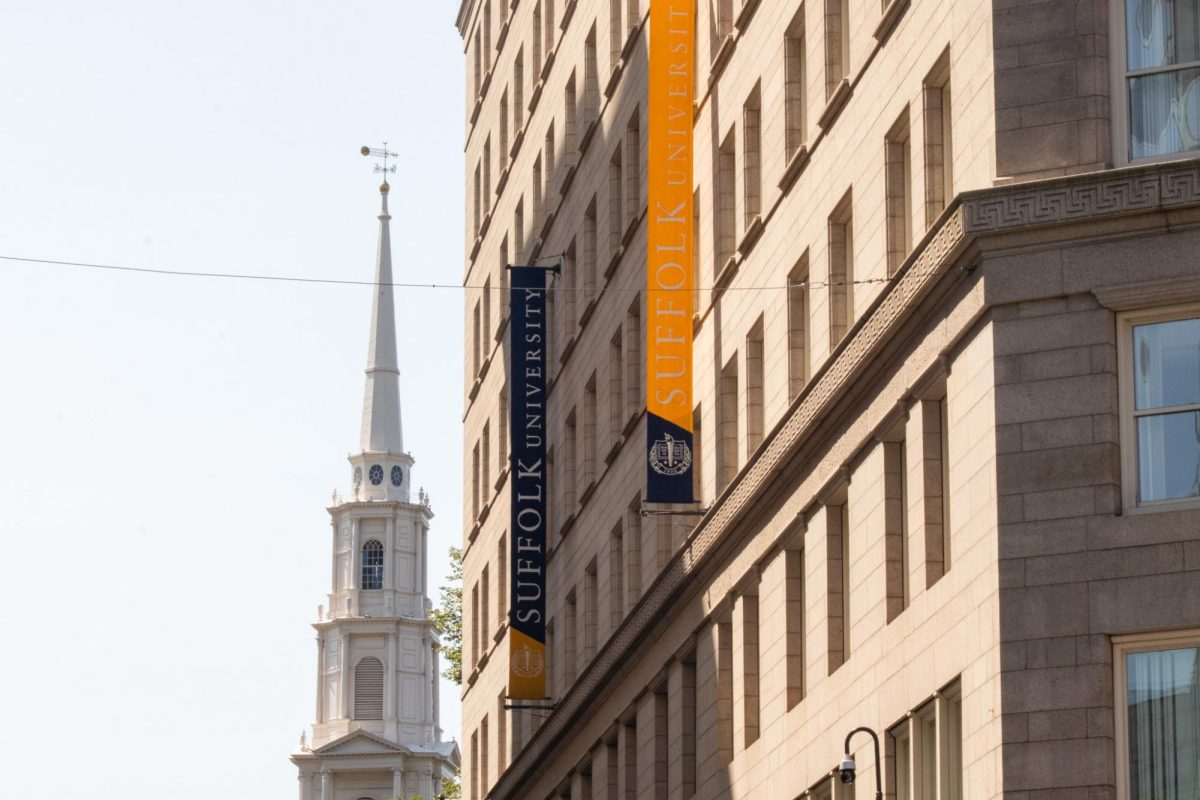
I am proud, if not cautious, to say that I feel safe at Suffolk University. Safety is clearly an ongoing conversation here — the fact that a year of community debates were held over arming campus police officers is in the rear view, with ongoing conversations about the decision’s recent implementation, is clear evidence of that, very valid criticisms of the decision aside. Our dutiful security guards and force of experienced and capable campus police officers, paired with strong security protocol to enter buildings and what I see as an up-to-date network of security cameras, are a constant for us Suffolk students, one I feel I’ve taken for granted.
This is not to say that Suffolk’s approach to security is perfect by any means, or that my call for change does not apply to the university, but I do believe other institutions could have something to learn from Suffolk.
At no college or university, much less one with $8 billion in resources tucked away in its endowment as Brown does, should someone be able to enter an academic building undetected and not once caught on camera with multiple guns and high capacity magazines in hand.
Brown is not at fault — the shooter and America’s free-for-all gun access is. However, lack of fault does not automatically mean lack of responsibility, particularly a responsibility to examine how future tragedies can be prevented.
At Brown and at institutions across the country, practical conversations about security and surveillance need to be had. These conversations are difficult, but until we are ready to address America’s gun crisis, they are necessary.
Now is not the time to rejoice at the fact that the suspect was found. Now is the time for yet another community to come together to stomach an unimaginable tragedy. Now is the time to grieve three lives lost in Providence, Rhode Island and Brookline, Massachusetts. Now is the time to consider the various missteps and gaping holes in university security. Now is the time to change. Because, until we’re ready to stop the bullet holes, the least we can do is consider a band-aid.