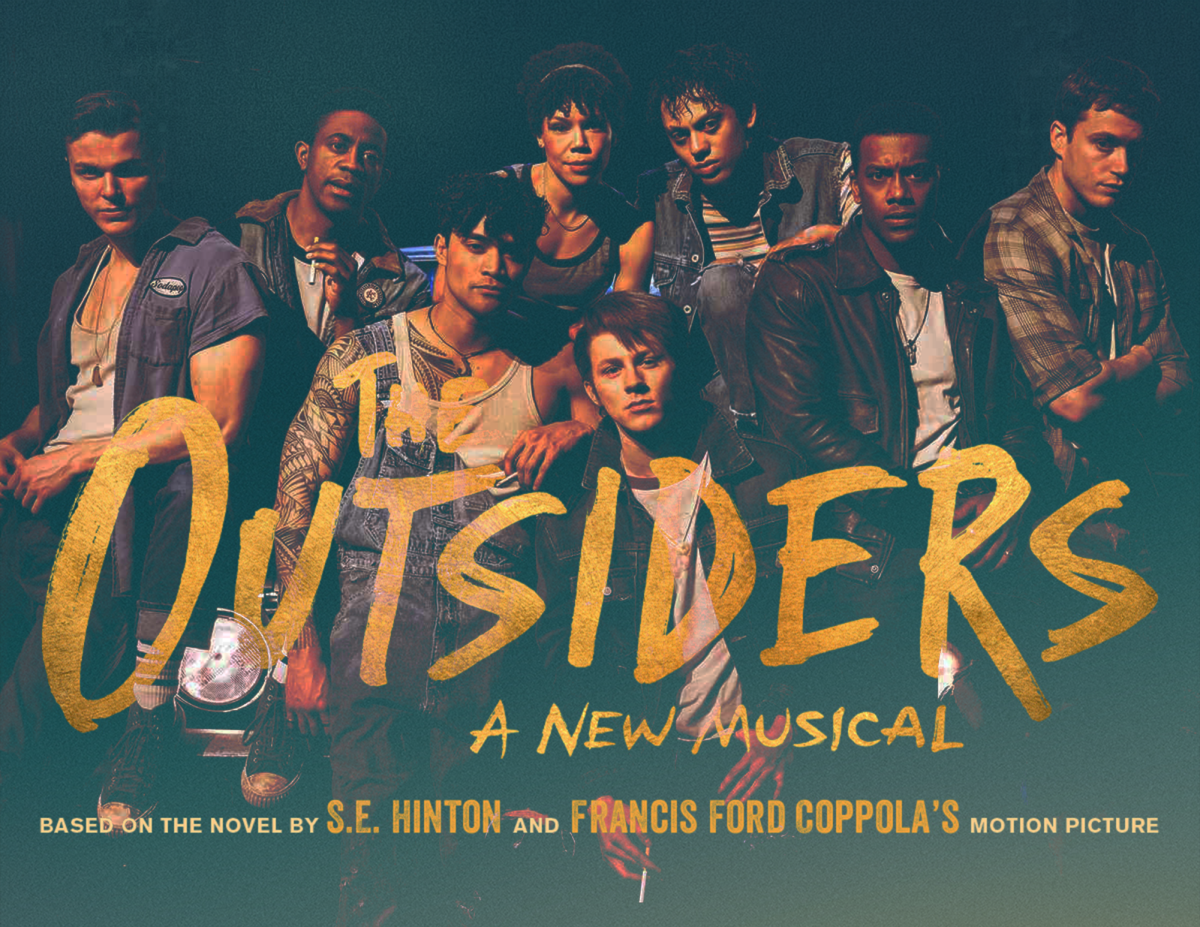
The timeless story of prejudice, rivalry, loss, loyalty and tenderness takes on a new form on stage in “The Outsiders: A New Musical.” The touring cast came to Boston’s Citizens Opera House March 31 through April 12, reviving the 1960s with cigarette smoke, switchblades, Robert Frost poems and rain.
For many, “The Outsiders” by S. E. Hinton was their first introduction to social class prejudice, and the novel has since become a staple of education in young adult literature, and now musical theater. It is hard to make a new adaptation of such a beloved story, especially when Francis Ford Coppola already made the best movie adaptation in 1983, but this new musical reinvents the classic tale in a tasteful fashion.
“The Outsiders,” a Tony-winning musical by Adam Rapp, premiered on Broadway in 2024. With music and lyrics by American folk duo Jonathan Clay and Zach Chance of Jamestown Revival, it has quickly become a powerful adaptation of the beloved coming-of-age story cherished across generations.
Boston’s touring cast was nothing short of brilliant, bringing the beloved characters and songs to life with vibrant energy April 11. Throughout the performance, the cast flipped across the stage, bounced on cars and splashed through puddles.
The production was impressive from props to costumes to lighting; it truly felt as though the audience was on stage with the cast, hanging with friends at the drive-in. The set design was simple, featuring a church backdrop, a run-down car, a box TV set and an old tire which was just enough to support the cast’s physical, sprightly energy without overwhelming it.
The production opened with Ponyboy Curtis (Jordan Deandre Williams) sitting on the edge of the stage, writing in his journal while the audience chatted quietly before the music began. This created an intimate moment that perfectly introduced Ponyboy’s character and narration, connecting the stage and audience for an exciting first Act.
Ponyboy’s familiar opening lines from the book begin the first song, “Tulsa ’67,” as he imagines a world beyond Tulsa, Oklahoma, and reflects on the hardships in his life. The slow opening quickly builds into a rock-infused, country-blues ballad that introduces the entire cast with their greased-back hair and varsity letterman jackets.
Ponyboy tells the audience about the other side of town and the central conflict of Socs versus Greasers, where the West Side Socs live comfortably due to wealth, while the Greasers on the East Side are lower on the social ladder.
The following track, “Grease Got a Hold,” introduces the Greasers’ gritty lifestyle through a groovy, upbeat piano-driven explosion, with Dallas Winston, Sodapop Curtis and Two-Bit (Jaydon Nget) flaunting their pride in being Greasers. In contrast, Darrel Curtis (Travis Roy Rogers) warns Ponyboy that being a Greaser really means working harder in life for everything you want.
Already, the audience is introduced to the fun energy of the show, with the perfectly timed choreographed dances reflecting the lovable camaraderie on stage between the talented ensemble.
Williams perfectly captured the innocent, inquisitive Ponyboy we know and love. In “Great Expectations,” he embodied Ponyboy’s sense of wonder and longing, and his vocal range was especially compelling. The song began slowly and built into a powerful, soaring display of vocals from both Williams and the cast.
Later at the drive-in, Ponyboy meets West Side socialite Sherri “Cherry” Valance, played by Emma Hearn, and the two discover they are more alike than they had assumed. “I Could Talk to You All Night” followed the two as they began to break down class stereotypes. The sweet duet reflected their newfound bond, showing how deeply they are connected despite their differences in status.
The nature of brotherhood is a central theme, and Sodapop, played by Corbin Drew Ross, was the perfect representation of optimism and mediation between the strict Darrel and angsty Ponyboy. His one liners were perfectly timed, reflected by the audience’s shared laughter.
“Run Run Brother” was one of the standouts of Act I. After Johnny Cade (Bonale Fambrini) accidentally stabs and kills a Soc who was attacking Ponyboy, the best friends realize they have nowhere to go and turn to Dally, who immediately steps in to help them by telling them what to do.
To create the illusion of the boys traveling and hopping freight trains, the cast used wooden structures and tires that they climbed and slid on throughout the song, adding to the awe of the production’s visual and physical staging. Tyler Jordan Wesley, who plays Dally, delivered a performance perfectly matched to the song’s quick energy, leading seamlessly into intermission and setting up the next act.
Act II was packed with powerful songs that continue the story. After the two boys find a hideout in an abandoned church, the two must lean on each other for comfort after facing a traumatic incident together, and fearing what comes next for them as wanted runaways.
“Death at My Door” is a slow guitar-plucked ballad, complemented by soft piano and strings, that follows the boys as they try to lift each other up while promising they won’t leave each other’s side. Sitting side by side with their legs hanging off the church balcony, Fambirini and Williams’ vocals harmonized effortlessly, making this a real tearjerker moment.
Back at home, Darrel and Sodapop worry about their brother. In the slow country-rock ballad “Throwing in the Towel,” Rogers delivered a simple but effective performance that reflected Darrel’s guilt and insecurities as a father figure to his brothers. Ross hit all the right high notes in this duet, and the two perfectly captured the bond of two worried brothers.
Back at the church, a fire breaks out and the boys discover children trapped inside, Ponyboy and Johnny don’t hesitate to risk their lives to save them, earning them titles as heroes in the local paper, but leaving Johnny gravely injured. The stage production in this scene was riveting, perfectly emulating a real fire with flashing red and orange lighting and smoke.
With Johnny in the hospital, Cherry urges Ponyboy to end the feud between the Socs and Greasers. “Hopeless War” brought out Hearn’s beautifully elegant vocals in this slow country twang ballad. Her performance was powerful and passionate, making the song a moving plea filled with desperation and sorrow.
Against Cherry’s advice, Ponyboy joins his fellow Greasers in the rumble, fighting for Johnny. This was the most epic moment of the entire production. The choreographed fighting was seamless, and the thundering rain shower on stage was truly impressive. It was remarkable how effortlessly the cast ran across the stage through heavy rain and mud while still making the fight feel so believable. The slow-motion fistfight sequence with flashing lightning was mesmerizing and truly showcased the cast’s talent. Their rain soaked muddy clothes and bloody noses were a testament to the cast’s dedication of bringing this scene to life.
Even though the Greasers won the rumble, they still lost their beloved Johnny, leaving the gang completely heartbroken. Dally, the always confident and headstrong one, felt personally responsible for Johnny’s death, causing him to spiral.
Wesley’s performance of “Little Brother” was palpable, easily making this song one of the best. The blues-jazz elements were addictive, and Wesley’s soulful voice delivered a powerful gut punch. Dally’s anger and sadness fueled Wesley’s performance, complemented by the ensemble’s beautiful gospel backing vocals, making Dally’s inevitable suicide all the more devastating and powerful.
If the audience wasn’t already in tears from Wesley, Fambrini’s final performance of “Stay Gold” was certainly the final blow. Ponyboy discovers a letter Johnny wrote to him before his death, reflecting on the meaning of the poem “Nothing Gold Can Stay” by Robert Frost. Fambrini’s tender performance reminded the audience of life’s simple beauties, even in the face of hardship, encouraging a sense of peace and ultimately urging us all to “stay gold, Ponyboy.”
“The Outsiders” musical is a powerful representation of 1960s American folk-rock and blues, with all 19 tracks contributing to its success. The Boston touring cast truly mastered the story on stage, making this production one of the most compelling shows on Broadway right now.