
Four Suffolk environmental science students will be presenting their research at the Ocean Sciences Meeting held in Glasgow, Scotland this February. The students have been conducting independent research projects focusing on water quality in Dr. Hayley Schiebel’s lab.
The event, which takes place every two years, has been held in North Carolina, Hawaii, Oregon and Spain, routinely choosing locations with a strong connection to the ocean. But this is the first year it will be held in Scotland.
Through a grant funded by the National Science Foundation , Schiebel was able to bring one student with her to attend the Ocean Sciences Meeting in the past. This year, NSF has provided enough for 10 students to travel to Glasgow, four of which attend Suffolk, with the remaining funds being allocated to other undergraduate students who applied through the conference.
Students will spend just over a week there, departing Feb. 18 and returning Feb. 27. They will present their independent research projects to a room of up to 100 accomplished scientists, some with over three decades of experience.
“I’m excited to be able to take my whole lab group. It’ll be really fun, also, because they all are friends. It’ll be a fun adventure for them,” said Schiebel.
The students are part of a small portion of undergraduates that study in Schiebel’s lab for an extended period of time. Junior Ella Weinmann started her research project in May 2025, anticipating to spend nearly 540 hours on her work by the end of this semester. Similarly, senior Nolan Didonato began his project last February and has dedicated a lot of time to his research.
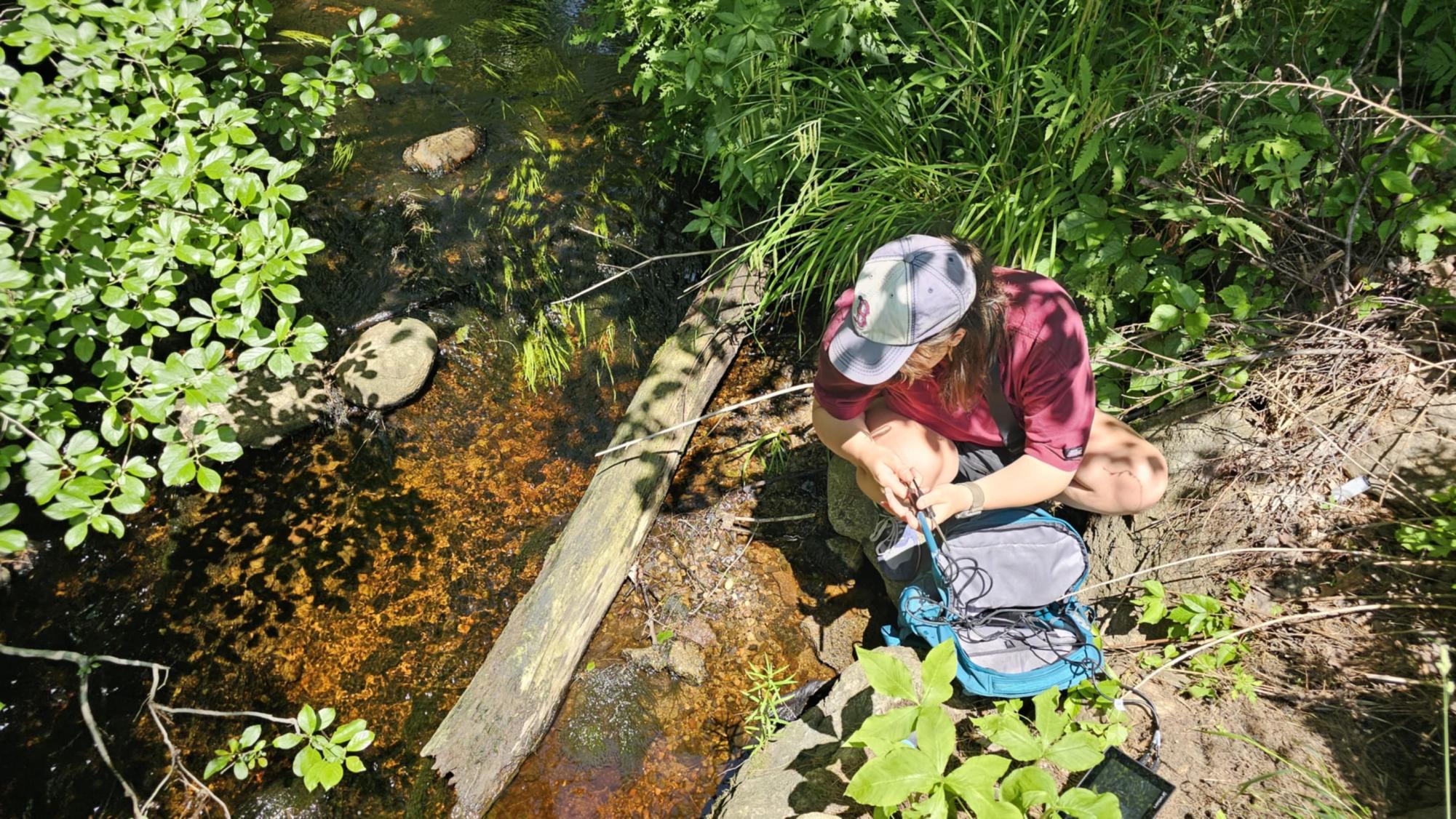
Over the summer, Weinmann collected weekly samples from nine bodies of water across Massachusetts and New Hampshire, testing for PH, dissolved oxygen and biodiversity. Her research focused on the impact land use has on water quality.
Didonato collected water samples from the Charles and Neponset rivers, focusing on how urbanization, industrial history and green space restoration impacts water quality.
“It’s definitely fun being able to get into the field and visiting my same two sample locations every week. It almost creates a relationship with the two bodies of water,” said Didonato.
Having grown up by the water in Beverley, Massachusetts, Didonato wanted to examine the effects of humans’ daily lives on significant bodies of water. He sees the Charles and Neponset rivers as important and central aspects of the Boston area. He regularly goes on runs and walks, which always lead him back to the Charles river.
“It definitely creates something meaningful beyond just collecting measurements and talking about something,” said Didonato.
Schiebel has developed a strong relationship with the four students. She said conversations beyond their projects come easy and watching them grow has been a privilege.
“Watching them grow up from little baby birds learning how photosynthesis works to where they are now is a really cool journey,” said Schiebel.
Her favorite part of the conference is being able to see the pride on her students’ faces after their presentations. She said when they are finally done and their nerves are gone, they can finally realize how much they accomplished.
Schiebel recognized that pursuing a career in science in the United States may be daunting due to the current Trump administration. She hopes this conference will give the students hope as proof that scientists will continue to do the work no matter the circumstances.
A general theme repeated by the students and their advisor was how great of an opportunity an independent research project is as an undergraduate student. Weinmann started her project through a summer career development stipend offered by the Career Center. She said conducting an independent study has been a step beyond the classroom, establishing discipline and preparing her well for her future.
Schiebel also feels that some of the best learning opportunities can be found through experiential learning.
“There’s so many opportunities that I think people just don’t know about because if you just go to Suffolk and do your classes, there’s so much stuff you can miss out on… I’m sure that’s true for any major,” said Schiebel.
The upcoming Ocean Sciences Meeting in Glasgow is a testament to the opportunities that await students if they go the extra mile to conduct an independent study.
“My piece of advice would really just be: ‘Say yes to anything,’” said Schiebel.