If the Sawyer Business School Sports Management program can learn anything from its partnership with the Boston Celtics, it’s the importance of DNA.
And that is exactly what the Playing with Purpose panel with Celtics Community Relations and partners hammered home Nov. 5. In an event organized by Arthur “Skip” Perham and hosted by Kwani Lunis from NBC10, the message could not have been clearer. There is a responsibility to communities that corporations owe.
For keynote speaker David Hoffman, there is a legacy that the Celtics uphold, one far beyond 18 banners. Before the team had won any championships, they drafted the first Black American player, Chuck Cooper. That action is emblamatic of the organization’s mission that has lasted into the present day.
“Actually, our activism as an organization predates our championship DNA,” said Hoffman. “What a gift, an incredible gift given to us by the courage of Chuck Cooper and the fact that he was wearing a Celtics jersey while he did it.”
That legacy solidified a mission of advocacy for the Celtics, who both in present day and past endeavors, stand up for marginalized individuals and groups. The severity of community issues in Boston and New England was perpetuated by the COVID-19 pandemic and the murder of George Floyd, according to Hoffman.
While the Celtics brand was engaging in issues of inequality, it was that moment that incentivized a broad-spanning associated and commitment to corporate social responsibility.
“Floyd was murdered, coming off in a series of high definition videos depicting largely men, in some cases, women of color being killed and other social justice related issues. It became increasingly clear that regardless of what each of us has or hasn’t done to address disparities in our society, whether it was personally driven or driven by institutions that we were a part of, it just simply hasn’t been enough,” said Hoffman.
It was in the initiatives beyond that period of political awareness that produced a current Celtics organization toting partnerships with Amica, Make-A-Wish and many other local groups to rally under the same missions.
Managing $5 million in funds for nonprofit work from partners and local entities, Hoffman has a lot to consider when it comes to deciding where the Celtics name puts its resources. Massachusetts has one of the highest non-profits per capita in the country, and with an organization like the Celtics, the donation requests can become daunting.
“It can get a little disorienting,” said Hoffman. “If you don’t develop a focus area and you don’t develop a strategy, you can be blown with the wind and staying at a surface level, which is fine, but we’re trying to create systemic change.”
That’s where the data comes in for the team, who have honed in on an intersecting number of issues with a primary goal in mind: The future generations’ access to education and resources.
“There’s a tremendous amount of data that highlights inequities impacting children, which is our mission, and our focus, that comes out of academic institutions like this and others from around town. The news, the media outlets, you don’t have to look very far to see data that really pisses us off,” said Hoffman.
And when something pisses Hoffman and his colleagues off, they go forward with solutions.
After Hoffman spoke, panelists from Celtics community relations and partners took to the stage to dig deeper into how the organization makes all they do possible. Kash Cannon, director of community relations with the Boston Celtics, Assistant Vice President and Communications Director with Celtics partner, Amica, Nick Macera and Monica Julian, senior director of the Make-A-Wish community in Boston and Rhode Island chapters, are all part of that mission’s success with the Celtics.
Amica is one of the Celtics’ partners who contributes to their goals surrounding early childhood education. Part of this is their programs developing early childhood education centers in communities most in need. Macera spoke to the audience about a new center in Providence, Rhode Island, which shows many signs of being an early education desert. A partnership with the Celtics has only elevated the amount of impact Amica and the Boston team can have on these problems across New England.
“There’s a saying, you know, if you want to go fast, go alone, but if you want to go far go together,” said Macera. “A lot of the factors that we talk about that we see in society, a lot of it stem from not having an adequate early education. So for us, we look at this as not just helping a child with an early education, we’re setting their families and generations up for success, and we’re grateful to be able to be partnered with someone like the Celtics to be able to do this, because we couldn’t do it alone.”
These strategic partnerships also make for change on the streets of Boston. Cannon shared with the audience one of the Celtics’ other funded community uplifters: A Curbside Care unit that allows for underprivileged expecting and current mothers and children to be taken care of just steps away from their home. Staffed with a midwife, a lactation consultant, a nurse practitioner and a community wellness advocate, the care unit hopes to reduce complications in pregnancy and birth that disproportionately affect Black women and underprivileged communities.
Community projects like the Curbside Care unit go beyond the Celtics organization’s behind-the-scene’s heroes, but also resonate with on-court personalities, who are also a large part of community giving.
“We have untraditional support, like Jason Tatum and his family. They donated a ton of baby clothes; donated a ton of the Jason Tatum baby sneakers to curbside. Derek White bought strollers and car seats for the Curbside Care moms, and it’s because they all have a connection to it in some way, fashion or form,” said Cannon.
These kinds of interventions for underprivileged communities can be made at the micro-level for just a single individual. Make-A-Wish has always been a prominent group for extremely ill children, but in a partnership with the Celtics, where the organization grants wishes, but also hosts Wish Day with the team at TD Garden, Julian is able to see how much change can be made for kids just meeting a player or attending a practice.
“I think we should pay more attention to the stories and the smiles beyond the numbers. And I think the ultimate goal should be for the work to outlive a specific moment,” said Julian. “So the testimonials, the quotes, the pictures after, of the joy and hope that was given to them, and then it’s our role with our partners to share with them.”
A partnership with the Celtics and Suffolk University stretches much farther than an opportunity for aspiring business students, exhibited by the much deeper meaning the organization has developed for the community of Boston and New England. The meaning of a partnership rang in the speakers testimonial on their missions with the organization: Systemic change is in the Boston Celtics DNA.
“The most important thing about this event that students need to understand is, you know the Celtics are a basketball team, and that’s their core business, but their DNA is much much broader than that,” said Perham, the director of the sports management program. “They want to do much more in the community than just entertain.”
Students from across Suffolk University came to the event for a taste of the organization’s mission that is so much bigger than basketball.
“I love sports, and I find it to be like the new churches. It really gathers people and every time I come to these networking events, I always take a piece of it out of the room with me,” said Ella Morelli, a sophomore public relations major.
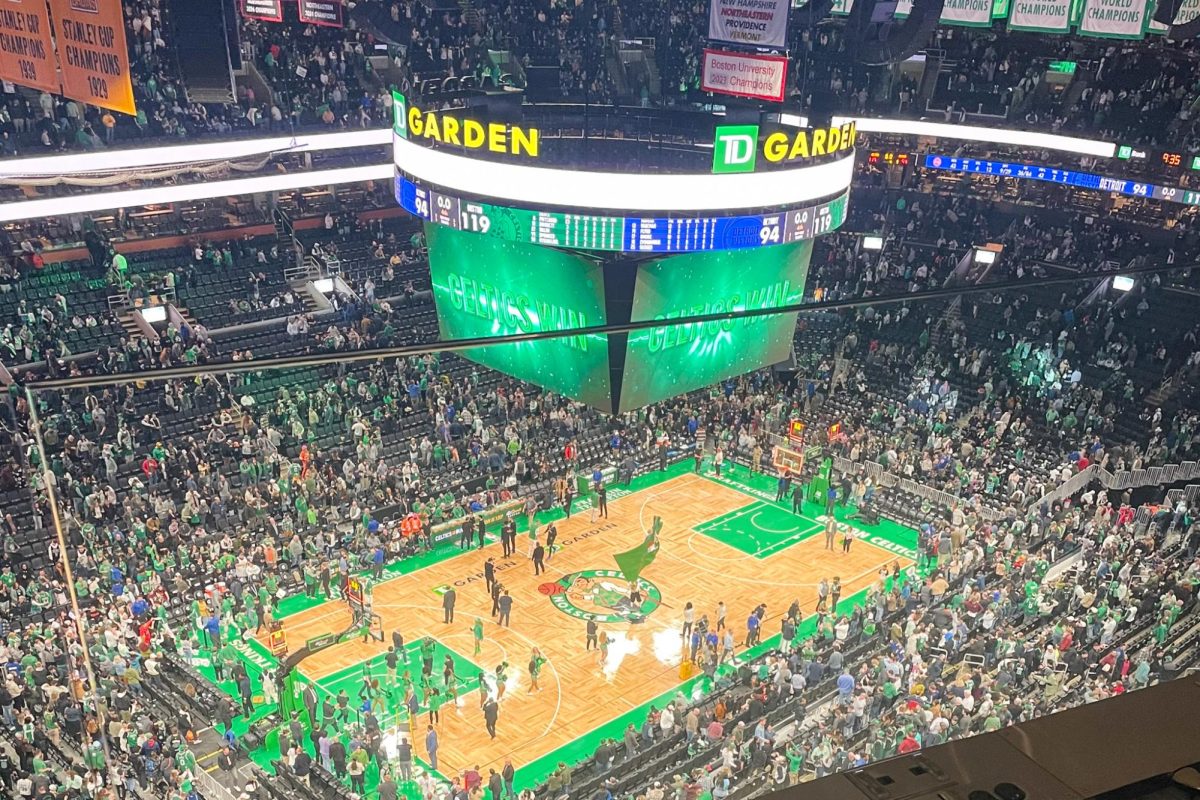
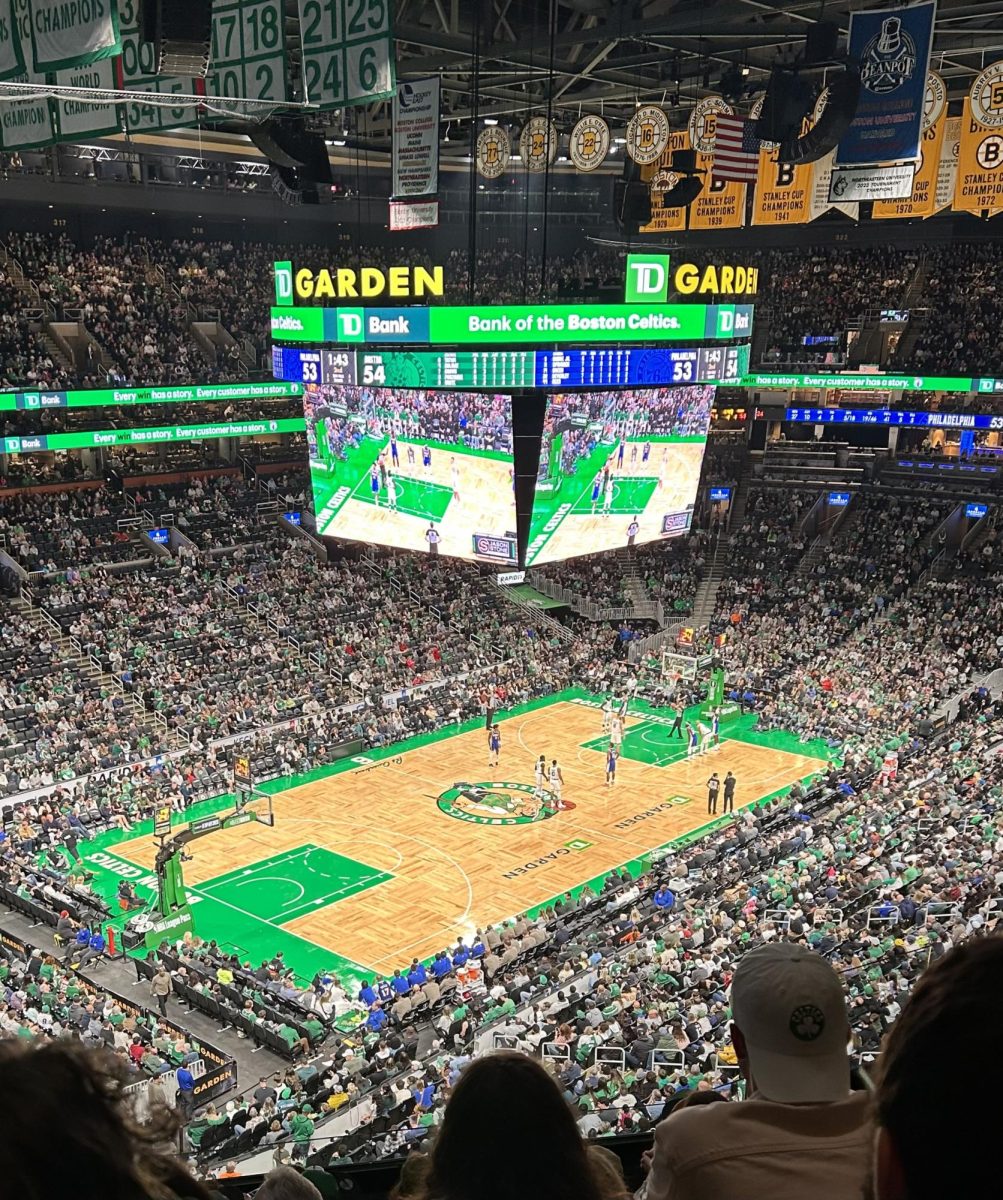
Some lucky students who participated in answering questions posed during the keynote got to take not only a better understanding of Celtics branding with them as they left Sargent Hall, but tickets to the evening Celtics game at TD Garden.